
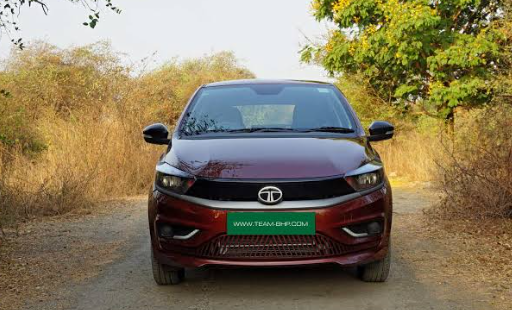
The refreshed Tata Tiago EV is one of the more accessible electric cars in India, with a starting ex-showroom price of Rs. 6.99 lakh. Its appeal is strongest in regular city use, where home charging and predictable daily distances work in its favour. Comparing it with a petrol hatchback such as the Maruti Suzuki Swift shows where the EV advantage is real and where a conventional car remains simpler.
Tiago EV versus Swift: compare the ownership inputs first
| Decision factor | Tata Tiago EV | Maruti Suzuki Swift |
| Starting ex-showroom price | Rs. 6.99 lakh | Rs. 5,83,900 |
| Energy source | Electricity | Petrol / CNG |
| Battery / engine | 24 kWh battery highlighted on current model | 1.2-litre petrol |
| Claimed range / efficiency | 285 km ARAI certified range | 24.8 kmpl MT; 25.75 kmpl AMT |
| Daily refuelling routine | Home or public charging | Fuel station |
| Best fit | Regular urban running with charging access | Mixed use with quick refuelling flexibility |
The claimed range is not the distance you should plan to empty
The current 24 kWh Tiago EV is rated at 285 km on the applicable ARAI cycle. Tata also publishes a C75 real-world reference of roughly 205 to 215 km under its defined testing approach. Actual range still moves with speed, temperature, traffic, gradients, payload and air-conditioning. For commuting, build your routine around a reserve instead of planning to arrive with a nearly empty battery.
Charging convenience decides whether the EV feels easy
Tata states that the updated Tiago EV can add around 100 km of range in about 18 minutes under suitable fast-charging conditions. That is useful for an unplanned top-up, but most economical EV ownership generally comes from slower home charging. Before purchase, verify parking access, electrical load and installation cost. If your car is parked on the street or your society cannot support a charger, the advantage narrows quickly.
Where the Swift remains simpler
The Swift can be refuelled in minutes and has a nationwide petrol network, which matters on spontaneous long trips. Its current petrol manual claim is 24.8 kmpl and the AMT claim is 25.75 kmpl, while CNG variants are rated at 32.85 km/kg. Buyers who travel irregular routes, park in changing locations or frequently make unplanned highway journeys may value that flexibility more than the Tiago EV’s lower energy cost.
City running can favour the EV economically
For a commuter covering the same predictable route every day, electricity cost per kilometre can be substantially lower than petrol when charging is done at a residential tariff. However, a fair comparison should include the vehicle price difference, home-charger costs, insurance, financing and the number of kilometres you expect to drive during ownership. A low running cost does not automatically offset a higher purchase cost for a low-mileage household.
The practical equipment matters as much as range
The facelifted Tiago EV brings six airbags as standard and can add features such as a 360-degree camera on higher trims. These upgrades are useful in dense urban parking. A small EV also delivers quiet low-speed operation and immediate torque, which can make traffic driving relaxed. The Swift counters with a light hatchback format, straightforward refuelling and a broad service footprint. The better package depends on how predictable your mobility is.
Plan a highway trip differently in the EV
- Leave with enough charge to reach a primary charger while retaining a reserve.
- Save at least one backup charger near the same corridor.
- Expect charging speed to vary with charger output and battery conditions.
- Use a meal or rest stop for charging rather than treating every stop as lost time.
- Avoid assuming the ARAI range will repeat at sustained high speed.
Do the financing comparison on total cash outflow
If the EV needs a larger loan, compare total interest rather than only the EMI. A longer tenure can make the monthly gap look small while raising total borrowing cost. Include expected electricity or fuel spend for a realistic monthly distance. That gives you a personal break-even picture instead of a generic claim that one technology is always cheaper. Before choosing between the Tiago vs Swift, buyers should compare mileage, engine performance, cabin space, safety features, maintenance costs, and available variants.
A simple break-even method for Tiago EV buyers
Take your real monthly distance, multiply it by the petrol cost per kilometre of the car you would otherwise buy, and compare that with expected home-charging cost for the Tiago EV. Then divide the upfront price difference by the monthly saving. This is only a rough break-even, but it is far more useful than comparing claimed mileage with claimed range. Add insurance, financing and any home-charger work if those costs differ materially. If the break-even extends beyond the period you expect to keep the car, buy the EV because you prefer the driving and ownership experience, not because a spreadsheet says it must be cheaper. Conversely, a household with very high predictable city mileage may recover the premium much sooner.
Conclusion
The Tiago EV is strongest for buyers with dependable charging and regular daily mileage. The Swift remains easier for households that value fast refuelling and frequent long-distance flexibility. Choose between them by mapping your parking, trip pattern and annual kilometres; the badge and headline range should come after those basics.