
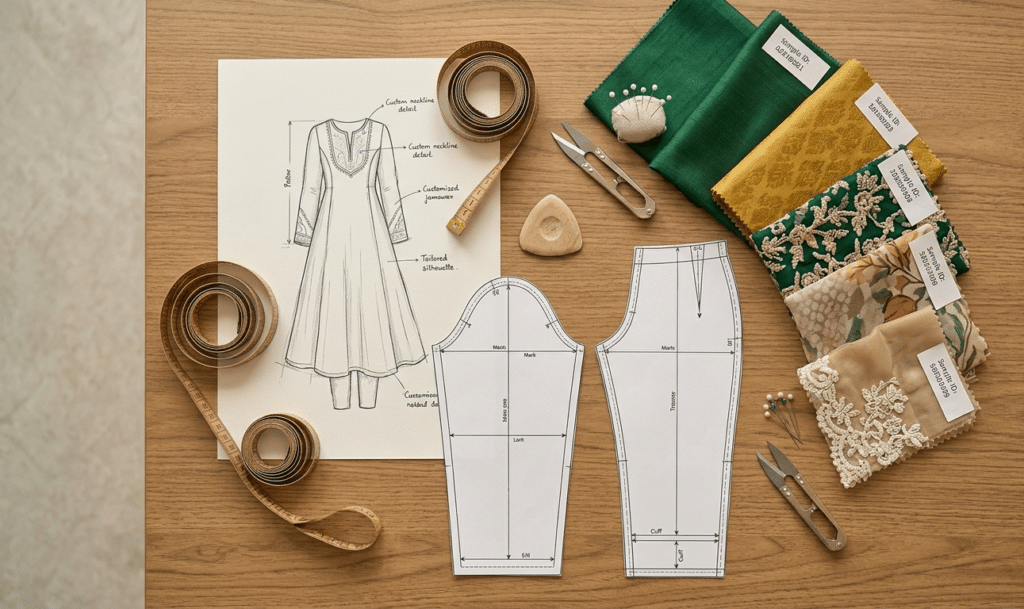
Pakistani clothes online have made it easier to access traditional and modern outfits without visiting a physical shop. Custom stitching adds another level of convenience by allowing fabric, measurements, colors, designs, and finishing details to be selected according to personal requirements. From unstitched lawn suits and embroidered fabrics to formal dresses and traditional shalwar kameez, online stitching services can turn fabric into a properly fitted outfit. However, a successful order requires careful attention to product details, measurements, stitching instructions, delivery information, and quality expectations. A clear step-by-step process helps reduce mistakes and makes the online custom stitching experience more organized.
1. Select the Right Pakistani Outfit
The first step is deciding what type of Pakistani outfit is required. Common options include shalwar kameez, three-piece suits, two-piece suits, kurtas, trousers, ghararas, shararas, and formal dresses. Fabric type also matters because lawn, cotton, chiffon, silk, linen, velvet, and jacquard have different stitching and handling requirements.
For seasonal clothing, lightweight lawn and cotton are often suitable for warmer weather, while velvet and heavier fabrics are commonly used for winter and formal wear. Before placing an order for Pakistani clothes online, checking the fabric description, included pieces, embroidery details, and available sizes can prevent confusion later.
2. Check the Fabric and Design Details
Custom stitching starts with understanding exactly what the fabric set contains. Some online listings include a complete three-piece suit, while others may provide only shirt fabric or a shirt with matching trousers. Embroidered panels, lace, borders, sleeves, dupattas, and accessories may also be included separately.
Important details to check include:
· Fabric material and quality
· Shirt and trouser length
· Dupatta fabric and dimensions
· Embroidery placement
· Printed or embroidered borders
· Lace or embellishment requirements
· Available color options
· Care and washing instructions
A detailed product description provides a useful reference before stitching begins.
3. Take Accurate Body Measurements
Measurements are one of the most important parts of a custom stitching order. A small measurement error can affect the overall fitting, especially around the shoulders, chest, waist, sleeves, and trouser length.
Common measurements may include:
· Shoulder width
· Chest or bust
· Waist
· Hip
· Armhole
· Sleeve length
· Shirt length
· Trouser length
· Thigh width
· Bottom opening
Measurements should be taken with a soft measuring tape while standing naturally. The tape should remain comfortable rather than being pulled tightly around the body. Following the measurement chart provided by the stitching service is also important because sizing methods can differ between providers.
4. Decide the Desired Fit
Measurements alone do not always explain the preferred fit. A custom order should also include clear instructions about whether the outfit should have a loose, regular, or slightly fitted appearance.
For example, a traditional shalwar kameez may require a relaxed shirt and wider trousers, while a modern kurta may have a straighter or more fitted shape. Sleeve width, trouser style, shirt flare, side slits, and neckline shape can also affect the final appearance.
Clear fit instructions help the tailor understand the intended style rather than relying entirely on standard measurements.
5. Share Stitching Instructions Clearly
After measurements are prepared, stitching instructions should be written in a simple and organized way. Specific details are easier to follow when listed separately instead of being included in a long message.
Useful instructions may cover:
· Neckline style
· Sleeve design
· Cuff style
· Shirt length
· Side slit length
· Trouser style
· Pocket placement
· Dupatta finishing
· Lace placement
· Button requirements
· Embroidery positioning
Reference images can be helpful for complicated designs. A clear photo showing the preferred neckline, sleeve, or trouser style can reduce the possibility of misunderstanding.
6. Review the Order Before Payment
Before confirming the custom stitching order, every important detail should be reviewed. The product name, fabric, color, measurements, stitching style, quantity, delivery address, and additional instructions should match the intended order.
A final checklist can include:
1. Correct Pakistani outfit selected
2. Fabric and included pieces confirmed
3. Measurements checked
4. Fit preference added
5. Stitching instructions provided
6. Special design requirements mentioned
7. Delivery information verified
This simple review can help identify mistakes before the stitching process begins.
7. Understand Stitching and Delivery Time
Custom stitching normally requires additional processing time compared with purchasing ready-made clothing. The fabric must first be prepared, cut according to measurements, stitched, finished, checked, and packed.
Delivery time can also depend on the destination. Orders involving international shipping may require additional time because of courier processing and customs procedures. A realistic delivery estimate should therefore be considered before placing an order, especially when the outfit is required for a wedding, Eid, party, or other fixed-date event.
8. Confirm Alteration and Return Policies
Custom-made clothing can have different return and alteration conditions compared with standard ready-to-wear products. Before confirming an order, the alteration policy should be checked carefully.
Important questions include whether alterations are available, whether alteration charges apply, how fitting issues are handled, and whether customized garments qualify for returns. Keeping the original order details and measurement information can also make communication easier if an adjustment becomes necessary.
9. Check the Finished Outfit Carefully
Once the stitched Pakistani outfit arrives, the garment should be inspected before use. Check the measurements against the submitted requirements and examine stitching around the neckline, sleeves, seams, trouser waist, and hems.
The fabric should also be checked for visible damage, loose threads, missing embellishments, or incorrect design placement. If an issue is noticed, photographs and order details can provide useful documentation when contacting the stitching service.
10. Keep a Personal Measurement Record
Keeping a measurement record can make future Pakistani clothes online orders much easier. Measurements can be saved in a phone note or another convenient location and updated whenever body measurements change.
It can also help to keep preferred details such as shirt length, sleeve style, trouser width, neckline design, and fitting preference. Previous successful measurements can serve as a useful reference for future custom stitching orders, although measurements should still be checked before placing a new order.
Common Mistakes to Avoid
Several simple mistakes can affect a custom stitching order. Guessing measurements instead of measuring carefully, ignoring fabric details, providing unclear design instructions, and forgetting to mention preferred fitting are common problems.
Another mistake is assuming that every Pakistani clothing website follows the same sizing system. Size charts, tailoring methods, and measurement requirements can vary. Reading the instructions provided with each order is therefore more reliable than applying measurements from a previous supplier without checking.
How to Make Online Custom Stitching Easier
A smooth ordering process depends mainly on clear information. A measurement chart, written stitching instructions, reference images, and a final order review can make communication much easier. Keeping the order details saved until the outfit arrives also provides a useful record for checking the finished garment.
For special occasions, placing an order well before the required date provides additional time for delivery or alterations. This is particularly useful for heavily embroidered Pakistani suits, formal wear, and customized traditional outfits that may require more preparation.
Filhaal UK: A Practical Source for Pakistani Clothes Online
Filhaal UK provides access to Pakistani clothing for customers looking for traditional styles, contemporary designs, and occasion-based outfits through an online shopping experience. The value of an online platform such as Filhaal UK comes from making Pakistani fashion more accessible while allowing clothing selections to be explored remotely. Customers can review outfit details, fabric information, designs, and available options before placing an order. For custom stitching, accurate measurements and clear instructions remain essential. A structured ordering process, careful product review, and attention to fitting details can help create a more reliable experience when purchasing Pakistani clothes online.