
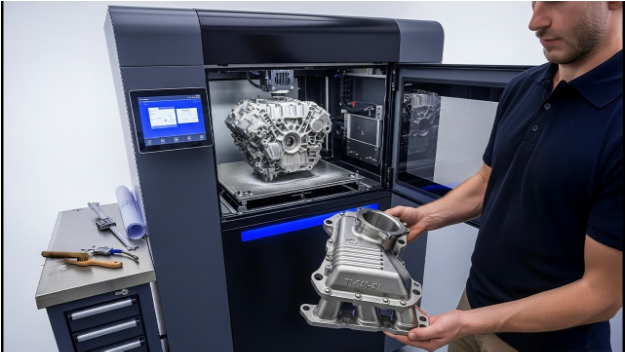
A promising sketch can spark an exciting idea, but turning it into a functional product takes careful planning, technical expertise, and repeated testing. Every design decision influences how the final component performs, looks, and functions in real-world conditions.
A Metal 3D Printing Service can help teams explore complex geometries and produce prototypes that traditional manufacturing methods may struggle to create. When combined with structured development processes, this technology helps designers evaluate concepts, identify weaknesses, and refine parts before committing to larger production runs.
Building a Strong Foundation for Product Development
Successful product development starts with understanding the problem a component must solve. Clear requirements help designers balance appearance, performance, manufacturing constraints, and cost before detailed engineering begins.
Defining Requirements Before Creating Designs
A concept becomes more practical when teams identify its intended purpose, operating environment, and performance expectations. Early decisions influence material selection, dimensions, tolerances, and assembly requirements.
- Identify functional needs: Establish what the product must achieve, including load capacity, operating temperature, and expected service life.
- Set design boundaries: Record dimensional restrictions, installation requirements, and compatibility with existing components.
- Establish evaluation criteria: Define measurable standards for strength, weight, usability, and overall performance.
- Prioritise essential features: Separate necessary functions from optional enhancements to keep development focused.
Documented requirements give designers and engineers a shared reference throughout the project. This reduces misunderstandings and helps prevent expensive revisions caused by overlooked specifications.
Turning Early Concepts Into Practical Designs
Initial sketches communicate an idea, but engineering transforms that idea into a component that can be tested and manufactured. Digital modelling helps teams investigate design choices before producing physical parts.
Refining Digital Models With Metal 3D Printing Service Capabilities
Computer-aided design software lets engineers examine geometry, adjust dimensions, and assess how features fit together. A Metal 3D Printing Service can support this stage by helping teams explore metal components with intricate channels, lightweight structures, or consolidated features.
- Develop detailed models: Translate sketches into three-dimensional designs with clearly defined dimensions and tolerances.
- Evaluate complex geometry: Examine internal passages, lattice structures, and shapes that may be difficult to manufacture conventionally.
- Review material suitability: Match material properties with expected loads, temperatures, corrosion exposure, and operating conditions.
- Prepare designs for production: Consider build orientation, support structures, finishing requirements, and potential distortion.
Digital refinement helps teams identify design limitations before manufacturing begins. However, simulation and modelling cannot replace physical validation, particularly when components must meet demanding engineering specifications.
Testing Prototypes Before Committing to Production
A digital model may look convincing on screen, yet physical testing can reveal unexpected weaknesses. Prototypes allow teams to examine fit, function, handling, and performance under representative conditions.
Evaluating Functional Prototypes Against Design Goals
Prototype testing provides evidence about whether a design performs as intended. Teams can use test results to distinguish minor improvements from fundamental problems requiring engineering changes.
- Check dimensional accuracy: Measure critical features and confirm that mating components fit correctly.
- Test functional performance: Evaluate strength, movement, thermal behaviour, or other properties relevant to the product’s purpose.
- Record observed defects: Document cracking, deformation, surface irregularities, or assembly difficulties.
- Compare results with requirements: Identify which specifications have been met and which need further investigation.
Testing should follow suitable procedures and account for the intended application. For safety-critical components, qualified engineers may need to establish additional inspection, certification, and validation requirements before approval.
Improving Manufacturing Readiness Through Iterative Design
Product development rarely follows a perfectly straight path. Feedback from prototypes, engineering reviews, and manufacturing assessments helps teams improve reliability while avoiding unnecessary complexity.
Reducing Design Limitations Through Iterative Improvements
Each prototype provides an opportunity to refine geometry, material use, and assembly performance. Small, evidence-based adjustments can improve a component without requiring an entirely new design.
- Review test findings: Use measurements and observations to identify the underlying causes of performance problems.
- Simplify unnecessary features: Remove complexity that adds cost without improving essential functionality.
- Optimise material distribution: Adjust wall thicknesses and structural features while maintaining required strength.
- Repeat critical tests: Confirm that modifications improve performance without introducing new weaknesses.
Controlled iteration makes design decisions easier to explain and verify. Keeping records of revisions also helps teams understand why particular changes were introduced and which version meets the approved requirements.
Preparing Components for Consistent Manufacturing Outcomes
A successful prototype is only one milestone. Before production, teams must consider repeatability, finishing, inspection, assembly, and the practical requirements of the intended manufacturing process.
Aligning Production Planning With Quality Expectations
Manufacturing readiness requires a clear understanding of how parts will be produced, inspected, and finished. Metal additive manufacturing may reduce certain geometric restrictions, but it can still involve support removal, heat treatment, machining, and surface finishing.
- Define inspection procedures: Identify critical dimensions, acceptable tolerances, and suitable measurement methods.
- Plan post-processing: Determine whether heat treatment, machining, polishing, or other finishing operations are necessary.
- Assess repeatability: Consider how production settings and material consistency affect component quality.
- Document acceptance criteria: Establish the checks required before parts can be approved for use.
These preparations help bridge the gap between a successful prototype and dependable manufacturing. Early coordination between design and production teams can also reveal practical constraints before they become expensive delays.
Conclusion
Moving from a rough concept to a functional component demands coordinated design, engineering, prototyping, and evaluation. Teams benefit from treating each stage as part of one connected process rather than a series of isolated tasks.
A product development agency can help bring these activities together by supporting concept refinement, technical design, prototype development, and manufacturing preparation. Studio 701 supports product ideas through design-led development, helping clients explore concepts and turn them into practical solutions. They bring creative and technical considerations together to guide projects from initial ideas towards functional outcomes. Before choosing their services, review their relevant experience, project scope, communication process, and expected deliverables. Understanding how they approach design decisions, prototyping, and revisions helps set clear expectations. A well-managed development journey turns an initial sketch into a tested, purposeful product with a clearer path towards production.