
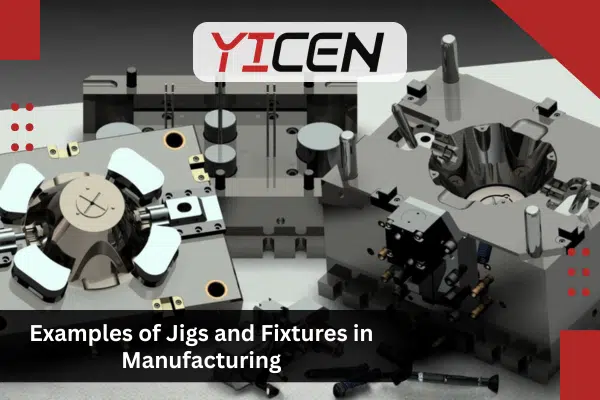
In modern CNC machining, manufacturers constantly face pressure to improve accuracy, repeatability, and production speed while keeping costs under control. One proven way to achieve these goals is through the smart application of jigs and fixtures that are engineered specifically for the part, process, and machine. These workholding solutions are not optional accessories anymore; they are strategic tools that directly influence machining quality, cycle time, and overall operational efficiency.
As CNC technology evolves, the role of custom tooling becomes even more critical. Generic workholding may appear cost-effective at first, but it often leads to misalignment, excessive setup time, and inconsistent results. Precision-focused manufacturers understand that well-designed jigs and fixtures tooling forms the foundation of stable, predictable, and scalable production. By integrating advanced locating strategies and purpose-built devices, shops can unlock higher throughput without sacrificing dimensional accuracy or surface finish.
Table of Contents
ToggleThe Role of Jigs and Fixtures in CNC Manufacturing
Defining Functional Differences and Applications
Although often mentioned together, jigs and fixtures serve distinct yet complementary roles in CNC machining. A jig primarily guides the cutting tool, ensuring consistent tool paths and hole locations, while a fixture securely holds and locates the workpiece during machining operations. Both are essential in maintaining positional accuracy and minimizing human error, especially in high-volume or complex part production. Understanding these functional differences allows manufacturers to select the right solution for each machining requirement.
In CNC environments, fixtures are more commonly used because modern machines already control tool movement digitally. However, jigs still play a valuable role in drilling, tapping, and specialized operations where tool guidance improves consistency. When properly applied, these devices reduce scrap rates, improve part interchangeability, and enable faster operator training, all of which contribute to higher manufacturing efficiency.
Impact on Accuracy and Repeatability
Precision machining relies heavily on repeatability, and this is where high-quality jigs and fixtures tooling makes a measurable difference. By precisely locating the workpiece relative to the machine datum, fixtures eliminate variability between setups. This consistency ensures that each part meets tight tolerances, even across long production runs or multiple machines.
Repeatable workholding also supports statistical process control and quality assurance programs. When parts are consistently positioned, dimensional variation is easier to monitor and correct. This stability is particularly important in industries such as aerospace, automotive, and medical manufacturing, where even minor deviations can lead to costly rework or rejection.
Key Principles of Jig and Fixture Design
Locating and Clamping Fundamentals
Effective jig and fixture design begins with proper locating. The goal is to restrict all six degrees of freedom of the workpiece using minimal and well-placed contact points. Common locating methods include the 3-2-1 principle, precision pins, and machined datums that align the part accurately within the device. Correct locating ensures that every machining operation references the same origin, improving dimensional control.
Clamping is equally important, as it must secure the part firmly without causing distortion. Over-clamping can deform thin-walled components, while under-clamping can allow movement during cutting. Skilled designers balance clamping force with part geometry, material properties, and cutting loads to maintain stability throughout the machining cycle.
Material Selection and Structural Stability
Material choice directly affects the performance and lifespan of jigs and fixtures. Hardened steels, tool steels, and alloy materials are often used for high-wear components, while aluminum may be selected for lightweight fixtures where frequent handling is required. The right material combination ensures durability, vibration resistance, and thermal stability during machining.
Structural rigidity is another critical factor. A well-designed fixture resists deflection under cutting forces, maintaining accuracy even during aggressive machining. Finite element analysis and practical shop experience are often combined to optimize stiffness while avoiding unnecessary weight or complexity in the final design.
Benefits of Custom Jigs and Fixtures Tooling
Productivity and Cycle Time Reduction
Custom-designed jigs and fixtures tooling significantly reduces setup time by simplifying part loading and alignment. Operators can position components quickly and confidently, eliminating trial-and-error adjustments. This efficiency translates directly into shorter cycle times and higher machine utilization, especially in batch or mass production environments.
Reduced setup time also supports lean manufacturing principles. When machines spend less time idle, overall equipment effectiveness improves. Over time, these incremental gains add up to substantial productivity improvements and a stronger competitive position in the market.
Quality Consistency and Cost Savings
Consistent workholding leads to consistent part quality. By minimizing variation, custom jig and fixture design reduces scrap, rework, and inspection costs. Parts come off the machine closer to nominal dimensions, which simplifies downstream processes such as assembly and finishing.
From a cost perspective, investing in custom fixtures often delivers a strong return. Although initial design and manufacturing costs may be higher than off-the-shelf solutions, the long-term savings from improved efficiency, reduced waste, and extended tool life make custom devices a smart financial decision for serious manufacturers.
Integration with Modern CNC Processes
Compatibility with Multi-Axis Machining
As CNC machines become more advanced, fixtures must adapt to support multi-axis operations. Five-axis machining, in particular, requires fixtures that provide secure holding while allowing unobstructed tool access from multiple angles. Advanced jig and fixture design addresses these challenges by minimizing interference and optimizing part orientation.
Well-integrated fixtures enable complex geometries to be machined in fewer setups. This reduction in setups not only saves time but also improves accuracy by maintaining a single reference throughout the machining process. The result is better surface quality and tighter tolerances on complex parts.
Automation and Scalable Production
Automation is reshaping CNC manufacturing, and fixtures play a key role in this transition. Robotic loading systems, pallet changers, and automated cells all rely on repeatable and robust workholding solutions. Fixtures designed for automation include features such as standardized interfaces, self-locating elements, and durable clamping mechanisms.
Scalable production depends on this level of reliability. When fixtures perform consistently across shifts and machines, manufacturers can confidently increase output without compromising quality. This scalability is essential for meeting growing demand and adapting to changing production requirements.
Design Considerations for Specialized Applications
High-Precision and Tight Tolerance Parts
For components requiring extreme accuracy, such as aerospace brackets or medical implants, jig and fixture design must account for micron-level tolerances. Thermal expansion, vibration, and tool deflection all influence final part quality. Precision fixtures often incorporate hardened locating surfaces, fine-adjustment features, and controlled clamping sequences to maintain dimensional integrity.
In these applications, the fixture becomes an extension of the machine itself. Close collaboration between design engineers and machinists ensures that the workholding solution supports the required tolerances throughout the entire machining process.
Complex Geometries and Custom Devices
Parts with irregular shapes or complex contours present unique workholding challenges. Standard fixtures may not provide adequate support or access, making custom devices essential. Advanced jig and fixture design uses contoured supports, modular elements, and innovative clamping strategies to accommodate complex geometries without compromising stability.
These custom devices enable manufacturers to machine challenging parts efficiently and accurately. By tailoring the fixture to the part, shops can expand their capabilities and take on more demanding projects with confidence.
Future Trends in Jig and Fixture Design
Digital Design and Simulation Tools
The future of jig and fixture design is increasingly digital. CAD, CAM, and simulation tools allow designers to model fixtures in detail, test load conditions, and identify potential issues before manufacturing begins. This digital approach reduces development time and improves first-pass success rates.
Simulation also supports optimization. Designers can evaluate different locating and clamping strategies virtually, selecting the most effective solution without costly physical prototypes. This efficiency accelerates time to production and enhances overall design quality.
Modular Systems and Flexible Manufacturing
Modularity is becoming a key trend in jigs and fixtures tooling. Modular fixture systems use standardized components that can be reconfigured for different parts, offering flexibility without sacrificing precision. This approach is ideal for manufacturers handling diverse product lines or frequent design changes. Flexible manufacturing relies on adaptable workholding. Modular and reconfigurable fixtures support quick changeovers and shorter lead times, enabling shops to respond rapidly to customer demands while maintaining high quality standards.
By focusing on thoughtful design, proper material selection, and integration with modern CNC processes, manufacturers can fully leverage the power of advanced jigs and fixtures. These essential tools not only improve accuracy and productivity but also provide a sustainable path toward higher efficiency and long-term manufacturing success.