
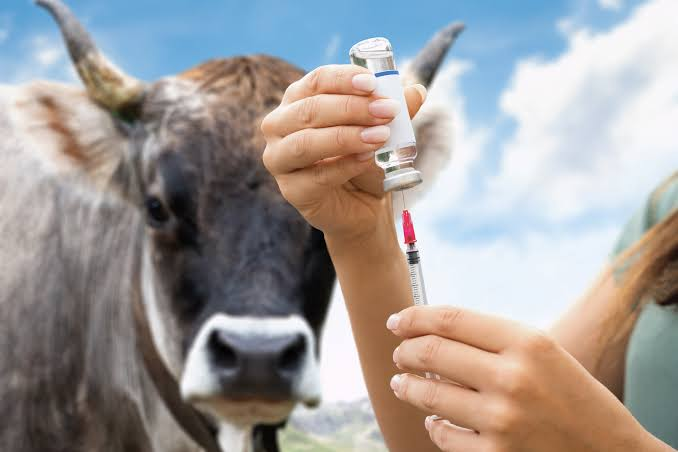
A veterinary pharma company in India develops and sells medicines for livestock, poultry and pets, either through its own manufacturing unit or through partner facilities. A veterinary manufacturing company in India goes a step further by producing those medicines itself under licensed, GMP-compliant conditions. Knowing the difference helps buyers choose with confidence.
The Role of Veterinary Pharma in India’s Economy
Animal health supports food security, rural livelihoods and household incomes. Dairy farmers depend on healthy cattle and buffaloes, poultry businesses run on tight health margins, and urban families increasingly treat dogs and cats as family members. A healthy animal population needs dependable medicines, and that is where the veterinary pharma industry steps in.
Industry estimates from MRFR (2025) put growth in India’s veterinary medicine manufacturing market at around 8.8% a year, with projections near USD 2.25 billion by 2034. Growth at this pace brings new brands, new entrepreneurs and a wider range of formulations.
Veterinary Pharma Company vs Veterinary Manufacturing Company
The two terms are often used interchangeably, but they can mean different things.
A veterinary pharma company is a broad term. It may research formulations, manage brands, market products and distribute them. Some own factories, others work with contract partners.
A veterinary manufacturing company in India owns or operates a licensed production facility. It handles raw material testing, production, quality control, packing and release. Its accountability covers the entire chain.
For buyers, the practical question is: who is responsible if a batch has a problem? A company that manufactures its own products can answer that directly.
Core Product Categories
Most established companies build their portfolios around a few dosage forms.
Injections
Injectables are used when fast action or reliable absorption is needed, for example antibiotics and pain relief. They require strict aseptic handling, so a manufacturer’s cleanliness controls are particularly important.
Boluses
Boluses are large tablets given orally to cattle, buffaloes and other large animals. Common types include calcium boluses for lactating animals, appetite boluses and antibiotic boluses.
Feed Supplements
Mineral mixtures, calcium supplements, liver tonics, multivitamins, electrolytes and gels support nutrition, recovery and productivity, particularly when grazing or feed is deficient in minerals.
Companion-Animal Care
Products for dogs and cats are a growing segment as pet ownership rises.
Standards That Define Quality
Regulatory licences
Veterinary medicines in India are governed by the Drugs and Cosmetics Act, 1940 and the rules made under it. Manufacturers need valid licences from the relevant state authority for the products they make.
GMP compliance
Good Manufacturing Practices set expectations for premises, equipment, personnel hygiene, documentation and quality control. Companies often reference cGMP and WHO-GMP norms as benchmarks of a disciplined operation.
Testing and documentation
Testing raw materials, monitoring processes and checking finished products against specifications protect consistency. Batch records let a company trace any product back to its inputs.
Labelling
Accurate composition, dosage, storage instructions, manufacturing date and expiry date are legal and practical necessities.
Trust Signals Buyers Can Verify
| Trust signal | What to check |
| Licence | Valid, current, matching the manufacturing address |
| GMP status | Certificate copy and issue details |
| Product information | Complete catalogue with composition |
| Track record | Years of operation, customer reviews |
| Transparency | Willingness to answer technical questions |
| Support | Clear contact details and response time |
Where Petvet Healthcare Fits
Petvet Healthcare is a veterinary pharma company in India headquartered in Ambala Cantt, Haryana. It manufactures injections, boluses and feed supplements and states that its operations follow WHO-GMP and cGMP norms. Founded in 2019, it supplies veterinarians, farmers, wholesalers and distributors across the country.
Visitors can review the complete product list and learn about the company’s background on the About Us page. For business partners, the company provides a PCD franchise and a third-party manufacturing service.
Business Models You Can Choose From
- Buy and distribute: purchase finished products as a wholesaler or distributor
- PCD franchise: market an established brand in an allotted territory, typically with promotional support
- Third-party manufacturing: have a manufacturer produce medicines under your own brand name
- Direct clinic supply: stock products for use and retail in a veterinary practice
Each model has different investment, risk and control levels. A PCD franchise suits people who want a quick start, while third-party manufacturing suits those who want to build their own brand identity.
How Quality Affects Animal Health and Business Reputation
A poorly manufactured medicine does harm on two fronts. The animal may not recover as expected, and the farmer or veterinarian loses trust in the brand that supplied it. Because veterinary customers often share experiences within tight local networks, a reputation for consistency can take years to build and only a few bad batches to damage.
That is why buyers should treat a manufacturer’s quality systems as a commercial asset, not a formality.
Questions to Ask Any Veterinary Manufacturing Company
- Do you manufacture the products yourself, or outsource them?
- Which licences and GMP certificates do you hold?
- How do you test raw materials and finished batches?
- Can I see sample labels and product specifications?
- What is your minimum order quantity and delivery timeline?
- How do you handle complaints or returns?
Frequently Asked Questions
What is a veterinary pharma company?
It is a company that develops, markets and supplies medicines for animals. Some manufacture in-house, while others work with partner manufacturers.
What does a veterinary manufacturing company in India do?
It runs a licensed facility that produces veterinary medicines, tests them and packs them for sale, taking responsibility for quality from raw material to release.
Are veterinary medicines regulated in India?
Yes. They fall under the Drugs and Cosmetics Act, 1940 and related rules, and manufacturers require appropriate licences.
Can I use human medicines for animals?
Not without veterinary advice. Doses, formulations and safety profiles differ between species, so always consult a registered veterinarian.
Conclusion
The veterinary pharma sector in India offers strong opportunities for farmers, veterinarians and entrepreneurs, but the value of any partnership depends on the manufacturer’s standards. Verify licences, ask about testing, review product ranges and choose transparency over the lowest price. To discuss your requirements, contact Petvet Healthcare or read more on the company blog.